
Roof stains are usually caused by moisture, biological growth, dirt, or aging materials. Some stains are mainly cosmetic, while others can signal blocked drainage, persistent dampness, or roof damage that deserves closer attention.
What causes dark stains on a roof?
Dark streaks on asphalt shingles are often caused by algae, especially a type that feeds on the limestone filler found in many shingles. The streaks may begin as small marks and gradually spread down the slope as rainwater carries moisture and organic material.
Other common causes include:
- Moss growing in shaded, damp areas
- Mold or mildew associated with prolonged moisture
- Leaves, pollen, and soil collecting on the roof
- Rust from metal flashing, fasteners, vents, or chimneys
- Water washing dirt from damaged areas
- Smoke or air pollution settling on roofing materials
- Uneven aging caused by shade, nearby trees, or different roof exposures
In Horseheads, seasonal changes can contribute to staining. Snow, spring rain, summer humidity, falling leaves, and repeated freeze-thaw cycles may keep portions of a roof damp for extended periods. Roof sections facing heavy shade or located beneath overhanging branches are usually more vulnerable.
Are roof stains a sign of a leak?
Not always. Algae and surface dirt can create visible discoloration without allowing water into the building. A stain becomes more concerning when it is accompanied by interior evidence, damaged shingles, or drainage problems.
Check the attic, ceilings, and upper wall areas for:
- Brown or yellow water marks
- Damp insulation
- Peeling paint or bubbling drywall
- A musty smell
- Soft wood around roof penetrations
- Daylight visible through the roof deck
- Moisture appearing after rain or snowmelt
A ceiling stain does not always appear directly below the source of a leak. Water can travel along rafters, roof decking, insulation, and framing before entering the living space. For that reason, tracing a leak from indoors can be misleading.
If a stain grows after storms, appears near a chimney or vent, or is paired with wet attic materials, the problem should be treated as a possible water intrusion rather than a cosmetic issue.
How can a homeowner tell the difference between algae, moss, and dirt?
Algae usually appears as flat dark streaks or broad gray-black discoloration. It may be more visible on the lower portions of shingles where water runs downward.
Moss is thicker and raised above the shingle surface. It may form green or yellow-green clumps, especially along roof edges and in shaded areas. Moss can lift shingle edges, interfere with water runoff, and hold moisture against the roofing material.
Dirt tends to appear as irregular patches, often near gutters, valleys, roof edges, or areas beneath trees. Unlike algae, dirt may loosen after gentle rinsing, although pressure washing is not appropriate for most asphalt roofs.
The appearance can overlap, so visual inspection is not always enough. A roof may have both algae and moss, or staining may conceal damaged shingles underneath.
Should roof stains be cleaned?
Cleaning may be reasonable when stains are limited to surface growth and the shingles remain in good condition. It can improve appearance and reduce the amount of moisture held against the roofing surface, but cleaning does not repair worn-out shingles, failed flashing, or inadequate drainage.
Roof cleaning should be approached carefully because asphalt shingles can be damaged by:
- Pressure washing
- Stiff wire brushes
- Aggressive scraping
- Harsh solvents
- Walking repeatedly on brittle or loose shingles
- Chlorine-heavy mixtures that harm plants, siding, or metal
A commonly used approach for asphalt shingles is a low-pressure treatment designed for roof materials, followed by natural weathering and rinsing from rainfall. The specific product and concentration matter, and runoff should be managed so that plants, soil, pets, and exterior surfaces are not exposed unnecessarily.
Cleaning during freezing weather is especially risky. Moisture can freeze on roof surfaces, creating slippery conditions and increasing the chance of shingle damage.
Is pressure washing safe for asphalt shingles?
Pressure washing is generally not safe for asphalt shingles. The force can remove protective granules, loosen shingle tabs, drive water beneath the roofing, and shorten the roof’s service life.
Granule loss may appear as exposed dark patches, bare areas, or excessive granules collecting in gutters and downspouts. Once the shingle surface has been damaged, cleaning cannot restore the original protective coating.
A roof may look cleaner immediately after pressure washing while being less capable of resisting ultraviolet exposure, rain, wind, and ice. Low-pressure methods are less likely to cause this type of damage, but they still require careful handling.
What should be checked before cleaning a stained roof?
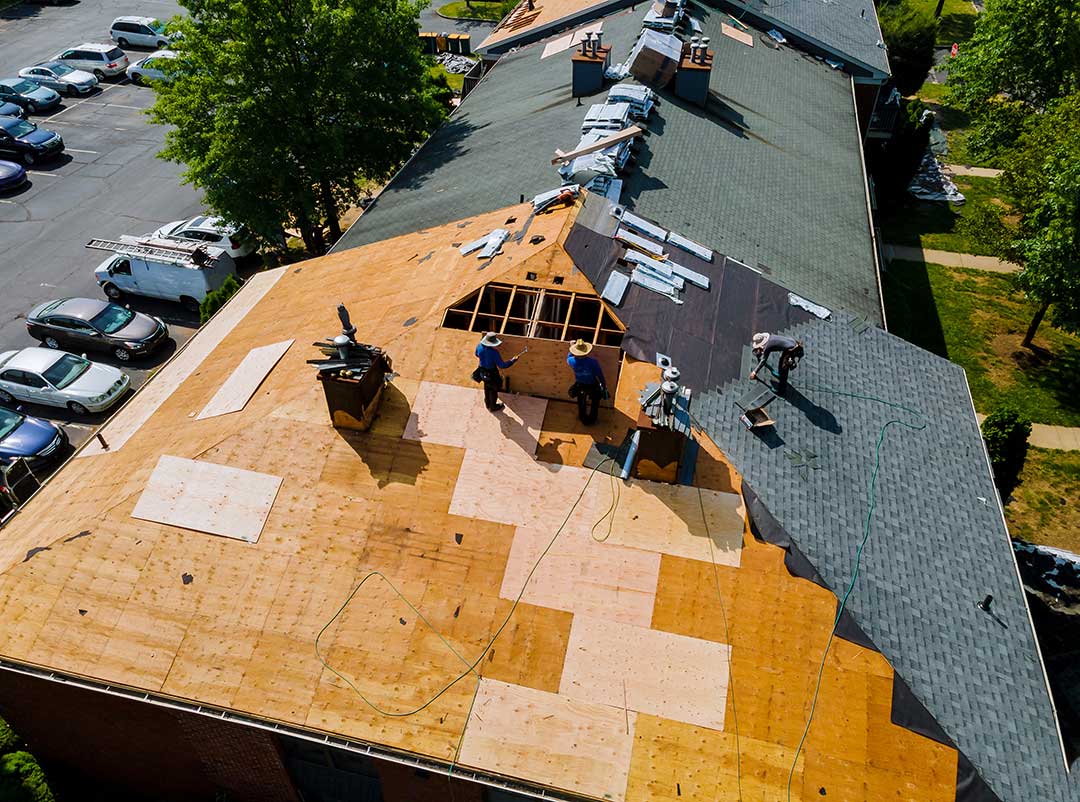
Before any cleaning begins, inspect the roof’s condition and the surrounding area. A roof that is already near the end of its useful life may not tolerate foot traffic or treatment well.
Look for:
- Missing, cracked, curled, or loose shingles
- Exposed underlayment or roof decking
- Heavy granule loss
- Sagging areas
- Damaged flashing
- Moss lifting shingle edges
- Gutter blockages
- Tree limbs rubbing against the roof
- Downspouts discharging too close to the foundation
If the roof is steep, wet, icy, fragile, or difficult to access safely, climbing onto it creates a fall hazard. In those conditions, a ground-level inspection with binoculars or photographs may be safer than walking on the roof.
How can roof stains be prevented?
Prevention focuses on reducing shade, standing moisture, and trapped organic debris. Useful maintenance steps include keeping gutters and downspouts clear, trimming branches that rest over the roof, and checking shaded roof slopes after wet seasons.
Adequate attic ventilation also matters. Warm, moist attic air can contribute to condensation beneath the roof deck, particularly during cold weather. Proper intake and exhaust ventilation helps reduce moisture buildup, although ventilation will not correct every roof stain.
Helpful preventive measures include:
- Remove leaves and branches before they accumulate
- Keep downspouts directing water away from the foundation
- Watch for moss around roof edges and in shaded valleys
- Avoid allowing vines or climbing plants to reach roofing materials
- Check attic insulation and ventilation for dampness or condensation
- Inspect after major wind, ice, or snow events
- Replace damaged flashing before small moisture problems spread
Metal strips installed near the roof ridge are sometimes used to discourage algae and moss growth as rainwater moves over the metal. They are not suitable for every roof and do not replace proper drainage or maintenance.
When does a roof stain require prompt attention?
Prompt attention is warranted when discoloration is accompanied by active dripping, sagging ceilings, wet insulation, widespread moss, missing shingles, or visible structural damage. Water entering an attic can lead to wood decay, insulation problems, and mold growth if moisture remains unresolved.
Stains that repeatedly return after cleaning also deserve investigation. Recurring discoloration may indicate a shaded moisture source, overflowing gutters, poor drainage, condensation, or a leak beneath the roofing material.
For residents managing homes through snowy winters and wet spring conditions, checking the roof and attic at least a few times each year can reveal problems before they become visible indoors. Roof stains are not automatically emergencies, but they should be interpreted in context: appearance, moisture, roof age, drainage, and the condition of the shingles all matter.
